(511) 326 1175
Corrugated Board Guide
CORRUGATED BOARD PACKAGING DISTRIBUTION
AND TRANSPORTATION GUIDE
This section provides recommendations for the proper distribution and transportation of corrugated packaging to ensure its optimal performance throughout the entire distribution chain.
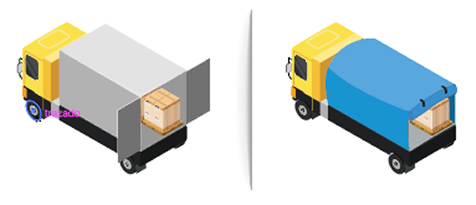
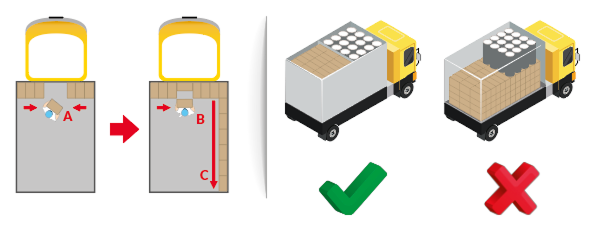
1. Vehicles used to transport packaged finished goods must be selected according to the loads characteristics.
Why? Inspect the condition of the truck floor before loading: must be free from protruding nails or splinters that could rip the boxes, or slits that allow water or dirt entrance during transportation. Fully enclosed trucks or vans should be used.
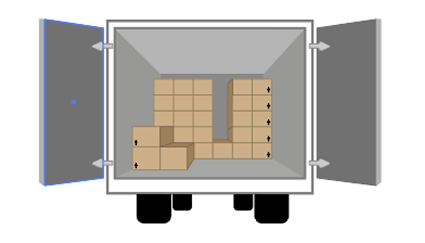
2. When loading the truck, boxes must be positioned with the corrugation running vertically and must be stacked in columns, ensuring that all corners are vertically aligned.
Why? During transport dynamic charges are generated (generated by the movement during transportation) that are very superior to those found in the storehouses or warehouses. For this reason it is important to maximize the strength provided by the corners of the boxes by stacking them vertically.
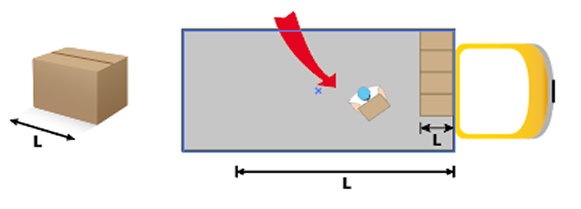
3. To obtain greater load stability during transportation, position the boxes with their longest side parallel to the length of the truck and their shortest side across its width.
Why? Truck movement moves the loads forward and backward. When positioning the longest side of the box running lengthwise along the truck, greater stack stability is achieved and therefore, the load moves less during transportation.
4. To achieve the desired load pattern quickly please follow these recommendations:
Why? Start loading from the far end of the truck, position the boxes along the sides first, and then continue toward the center, always with the longest side of the box running lengthwise along the truck. Once in the center, try placing the box running lenghwise or widthwise until a tight pattern is achieved. To establish the loading pattern, place a row of boxes on one side of the truck to determine how many boxes will fit on the truck bed.
It is recommended not to mix different type of loads when transporting boxes containing finished goods. If this is unavoidable, the different load types must be kept separate. One type of load must not be stacked on top of the other load type.